
Infrastructure Watch: Delfin LNG Pipeline - Drone Damage Assessment
SynMax Research:
Date of Flight: February 6, 2026
Location: Cameron Parish, Louisiana (29.753°N, 93.648°W)
Asset: Delfin LNG pipeline
Purpose: Independent verification of damages following pipeline explosion February 4, 2026
This is a prime example of Vulcan’s infrastructure analysis capabilities following major incidents, whether caused by environmental or anthropogenic factors. We provide these deep-dive assessments as private, bespoke services for our clients, or occasionally as a complimentary analysis to demonstrate our market-leading insights. For this assessment, we reviewed over 250 images and 1.8 GB of video. For commissioned client work, we provide the full supporting dataset alongside our expert interpretation and site-specific conclusions.
Summary
On February 6, 2026, two days after the explosion, we conducted an independent drone survey using high-resolution RGB and thermal infrared (IR) imaging to assess damage at the blast site and verify the condition of surrounding pipeline infrastructure.
Damage is confirmed and contained to the primary blast site along the pipeline route. The adjacent pipeline infrastructure shows no visible damage or thermal anomalies.
Site Damage - Confirmed
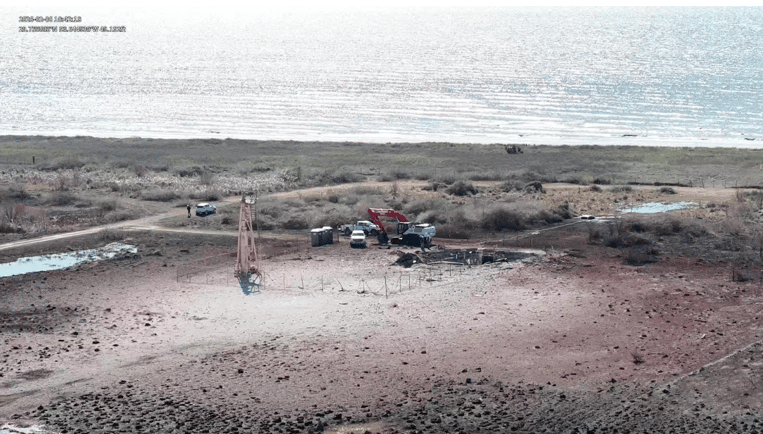
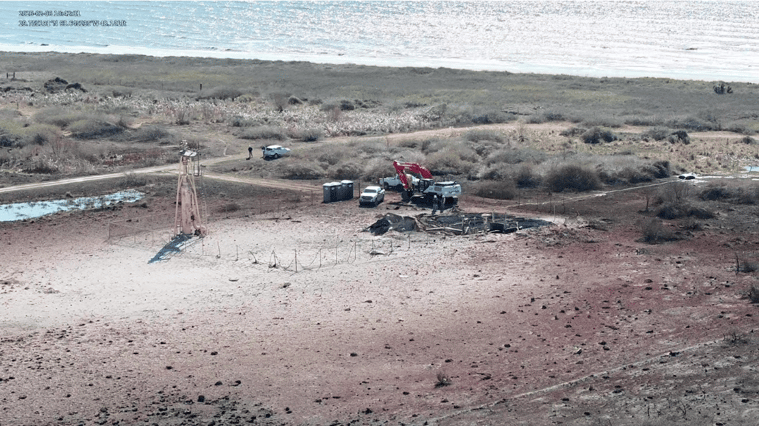
(Overview of damages - 10:42AM local)
The site of the explosion shows localized damage along the pipeline route with disturbed earth and debris visible. A temporary fence has been placed around the perimeter of the affected area. Heavy equipment and multiple vehicles were on scene, indicating active response and cleanup operations two days after the event.
Pipeline Infrastructure - No Damage Observed
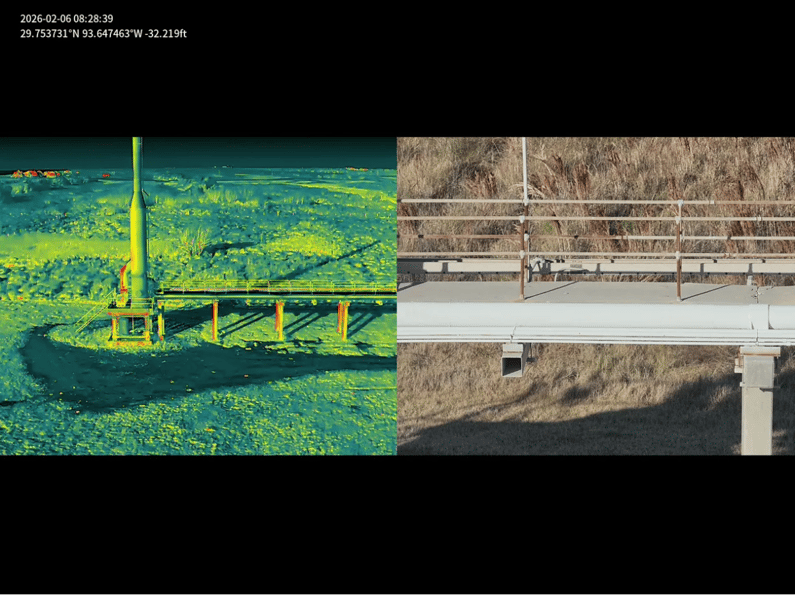
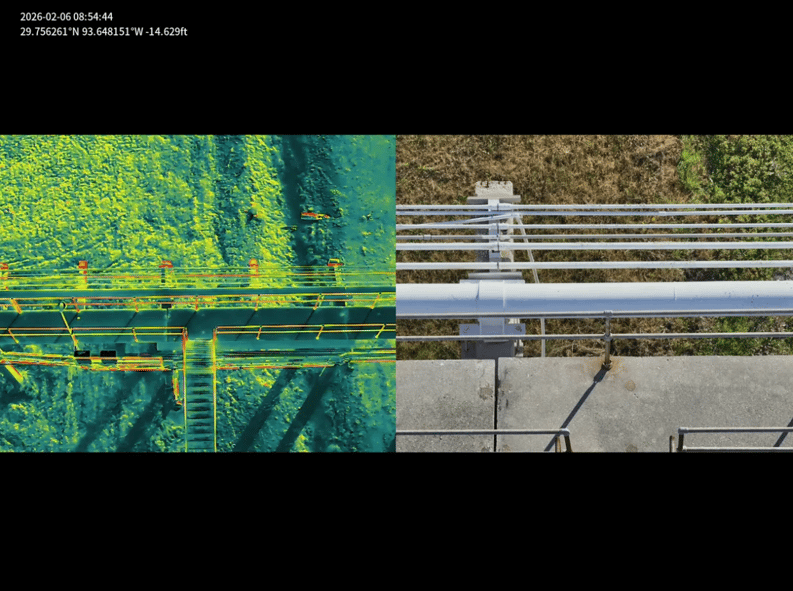
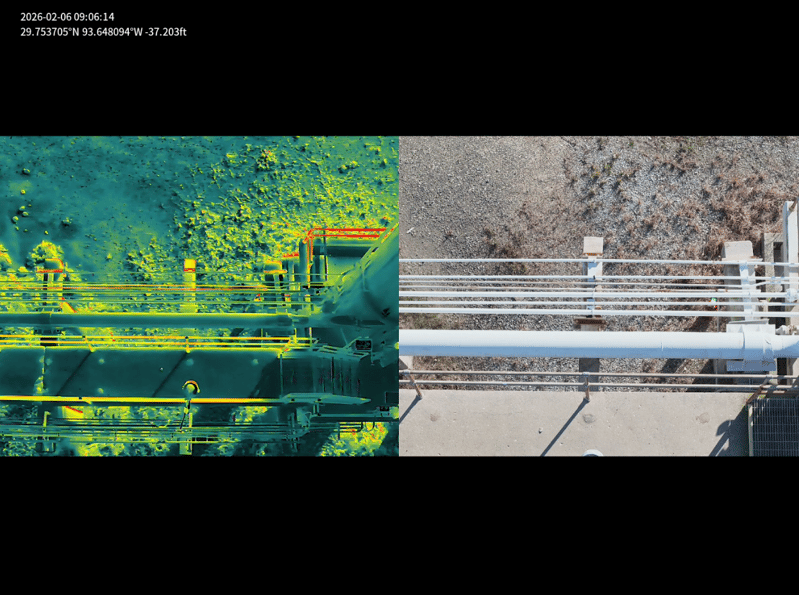
(Pipeline Infrastructure 08:27AM - 09:06AM local)
No evidence of damage, leaks, or operational disruption was observed along the pipeline assets. Visual inspection shows structural supports, pipe runs, and connections intact with no signs of displacement or deformation. Thermal imaging confirms uniform temperature profiles across all inspected assets with no anomalous hot spots or signatures indicating leaks or insulation failures.
Assessment
Confirmed: Localized damage at the blast site consistent with the reported pipeline explosion. Damage is contained to a single point along the route. Surrounding pipeline infrastructure appears intact based on visual and thermal aerial inspection.
Conclusion: The Vulcan Advantage in Infrastructure Monitoring
The Vulcan platform represents the next generation of infrastructure oversight, seamlessly integrating satellite surveillance with high-resolution thermal drone deployments to provide an unblinking view of global assets. By combining broad-spectrum orbital monitoring with the surgical precision of aerial thermography, Vulcan allows stakeholders to transition from reactive recovery to proactive management. Whether monitoring the multi-year progress of a new-build project or conducting rapid-response damage assessments—as seen here at the Delfin LNG pipeline—our multi-layered data approach delivers the "ground truth" that static reports simply cannot match. In an era of increasing infrastructure complexity and climate volatility, Vulcan provides the critical transparency required to ensure operational integrity and market stability.
For a demo, please reach out to David Bellman: dbellman@synmax.com
